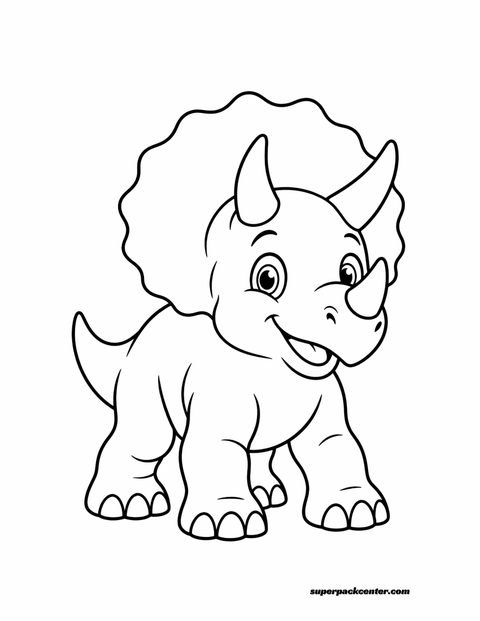
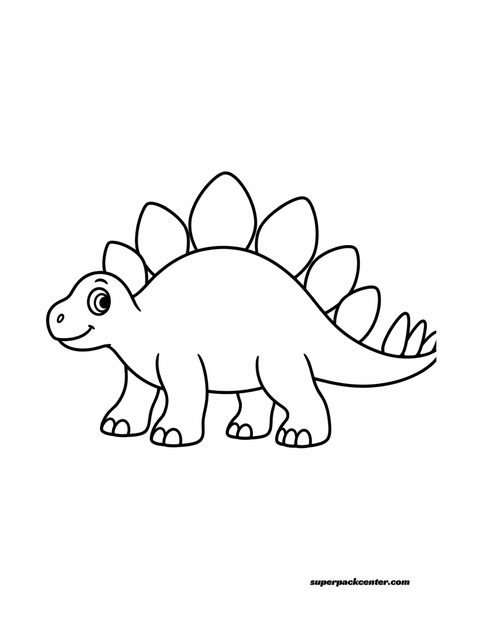
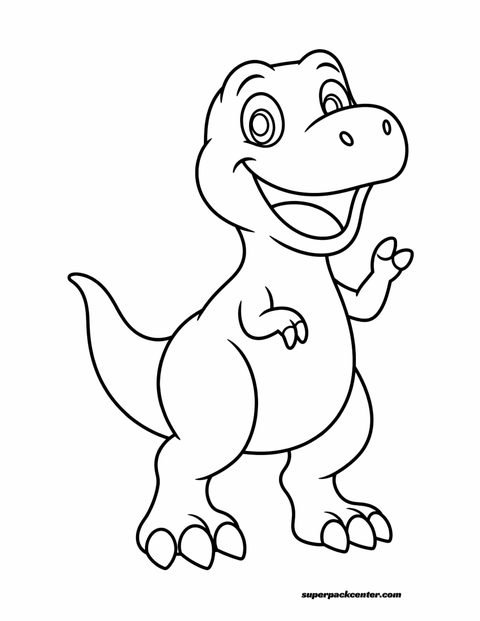
A coloring page does not have to be a quiet-time filler. With a few crayons, some scrap paper and a little imagination, one dinosaur page can turn into counting practice, story time or a small craft. Here are eight ideas that start with a printable page.
Each idea uses things you probably already have at home. Young children should always have an adult nearby when scissors, glue or small pieces of paper are involved.
1. Count the spots on the egg
You need: a baby dino egg page, crayons.
Before coloring, count the spots on the egg together, pointing to each one. Then ask your child to color the biggest spots one color and the smallest spots another. It is a gentle way to practice counting, comparing sizes and sorting, all without a worksheet.
2. Follow the dinosaur footprints
You need: a detailed scene page, paper, scissors (adult), tape.
Some scenes have footprints running across the ground. Ask your child to trace the trail with a finger, then to find where it starts and where it ends. For a movement break, cut simple footprint shapes from scrap paper, tape them in a line on the floor, and let your child stomp along like a dinosaur.
3. Clap the dinosaur names
You need: any dinosaur page.
Say the name slowly and clap once for each beat: Tri-cer-a-tops is four claps, and T-Rex is two. Long names are fun for little ones, and clapping syllables is a simple, playful way to listen for the parts inside words.
4. The two-color challenge
You need: a coloring page, two crayons.
Give your child only two colors and ask them to color the whole dinosaur with them. Then try again with two different colors. You will see patterns appear, and children often invent stripes, spots and checkerboards on their own.
5. Scales, spikes and texture
You need: a Stegosaurus or Triceratops page, crayons.
Show your child how a crayon colors differently when pressed hard, pressed lightly, or used on its side. Then ask them to choose which technique to use for the back plates, the horns and the belly. It turns coloring into a small decision-making game.
6. A torn-paper mosaic
You need: a page with large open areas, colored scrap paper, glue stick.
Instead of coloring, tear scrap paper into small pieces and glue them inside the outline of the egg or the dinosaur's body. Tearing and sticking is good hand work for small fingers, and the finished picture looks great on the fridge. Keep an eye on very young children so the small pieces stay out of mouths.
7. Turn it into a puzzle
You need: a colored page, a piece of cardboard, glue, scissors (adult).
Once your child has finished coloring, glue the page to a piece of cardboard, such as the side of a cereal box. Let it dry, then cut it into six to eight large pieces. Mix them up and let your child put the dinosaur back together.
8. Tell the story of the scene
You need: a detailed scene page, a pencil.
Detailed pages are perfect for storytelling. Ask open questions: What are the dinosaurs doing? Who do the eggs in the nest belong to? What happens when the volcano rumbles? Write your child's words on the back of the page, and you will have a short story they made up themselves.
Which activity should you start with?
Pick the one that fits your child's mood. Counting and clapping work well for busy mornings, and the mosaic or puzzle is better for a rainy afternoon. To get your pages ready, read our guide on how to print coloring pages at home, then download the free Dino Friends pack, which has the egg, the dinosaurs and a detailed bonus scene used in these ideas.